


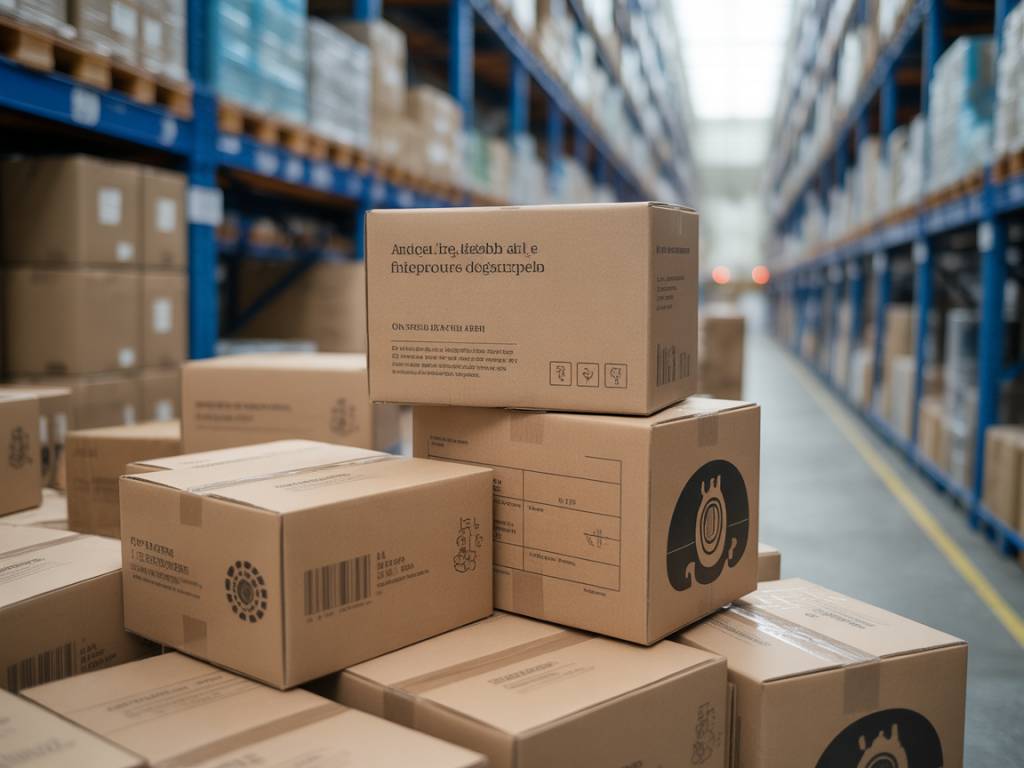
Why Generative AI Matters for Sustainable Packaging and Resilient Logistics
Packaging and logistics professionals are under simultaneous pressure to reduce environmental impact and increase supply chain resilience. Stricter regulations on packaging waste, growing consumer expectations for eco-friendly materials, and more frequent logistics disruptions are forcing companies to rethink how they design, source and distribute packaging.
Generative AI is emerging as a powerful ally in this transition. By using advanced algorithms to explore vast design spaces, simulate scenarios and anticipate disruptions, generative AI can accelerate the development of sustainable packaging solutions while strengthening logistics planning. For operations, packaging, and supply chain leaders, it opens a new path to reconcile cost, performance, and environmental responsibility.
From Static Packaging Design to Generative Co‑Creation
Traditional packaging design is often linear and manual. Designers and packaging engineers iterate through concepts based on prior experience, physical prototypes, and historical performance data. This approach is slow and inherently limited: it explores only a fraction of the possible combinations of formats, materials, and structures.
Generative AI in packaging design inverts this logic. Instead of a designer drafting one or two options, an AI model can generate hundreds or thousands of designs in response to a set of constraints and objectives. These constraints can include:
- Material type (recycled content, biobased materials, mono-material structures)
- Dimensional limits (palletization rules, shelf size, automated picking constraints)
- Strength and protection requirements (drop tests, compression, vibration resistance)
- Regulatory requirements (food contact, recyclability, extended producer responsibility)
- Branding and marketing guidelines (print areas, visibility, opening experience)
Within seconds, the system can propose alternative packaging concepts that satisfy these constraints to varying degrees. Designers then evaluate and refine the most promising options, turning generative AI into a co-creation partner rather than a replacement.
Optimizing for Sustainability: Materials, Volume, and End‑of‑Life
The sustainability impact of packaging depends on a complex mix of factors: material production, transport efficiency, protection rate, recyclability, and consumer behavior. Generative AI helps navigate these trade-offs more systematically than traditional manual methods.
Reducing material usage without compromising protection
Using historical test data and physics-based simulations, generative design models can identify structural patterns that maintain performance with less material. For example, they can:
- Suggest alternative flute combinations for corrugated boxes that reduce weight
- Optimize wall thickness on molded fiber or thermoformed trays
- Propose new reinforcement patterns or cut-outs that preserve strength
Over large product portfolios, even a small percentage reduction in board grade or plastic thickness translates into significant CO2 and cost savings.
Improving cube utilization and transport efficiency
Logistics emissions are directly influenced by how efficiently products are packed, stacked, and transported. Generative AI can connect packaging design to logistics data, exploring how a given primary or secondary pack will:
- Fill a master carton or returnable tote
- Stack on pallets in different configurations
- Fit in standard trailers or containers under various load plans
By simulating multiple packaging geometries against SKU dimensions and order profiles, AI can recommend configurations that improve load factor while limiting damage risk. This approach helps companies reduce the number of trucks on the road and the volume of air shipped with each order.
Designing for recyclability and circularity
End-of-life is a critical dimension of sustainable packaging. Generative AI tools can be trained to prioritize mono-material designs, minimize mixed-material components, and respect local recycling infrastructure. For international brands, the system can adapt design recommendations based on specific recyclability guidelines in each market, such as:
- National eco-modulation schemes for packaging fees
- Deposit-return systems for certain packaging formats
- Local availability of paper, plastic, or glass recycling streams
This capability is particularly valuable for teams that manage large, global packaging portfolios and need to harmonize sustainability objectives with market-specific regulations.
Connecting Generative Packaging Design to Real‑World Constraints
The promise of generative AI is only realized when models are grounded in operational reality. Integrations with PLM systems, WMS/TMS platforms, and supplier databases are critical. Packaging and logistics professionals should focus on feeding three key types of data into their generative systems:
- Technical packaging data: material properties, compression and burst test results, die lines, CAD files, performance test outcomes.
- Operational logistics data: SKU dimensions and weights, typical order quantities, distribution environments, historical damage and return rates.
- Sustainability data: life cycle assessment (LCA) results, recycled content levels, end-of-life scenarios, supplier emissions factors.
With these data streams, generative AI can propose packaging innovations that not only look good on screen but can be produced at scale, comply with regulations, and support existing automated systems.
Anticipating Logistics Disruptions with Predictive and Generative AI
Beyond packaging design, AI has a critical role to play in anticipating logistics disruptions and protecting service levels. Weather events, port congestion, geopolitical tensions, sudden demand spikes, and capacity shortages have become more common and more interlinked.
Predictive and generative models can be used to:
- Forecast disruptions based on historical patterns, news feeds, and live data
- Generate alternative routing scenarios and mode mixes
- Simulate the impact of packaging changes on logistics resilience
- Guide safety stock and buffer capacity decisions for packaging materials
For packaging-intensive industries such as e-commerce, FMCG, and pharmaceuticals, anticipating these disruptions is essential to maintain both availability and sustainability commitments.
Scenario Planning: Packaging and Logistics as a Single System
Generative AI is particularly effective at scenario planning, because it can simulate thousands of options and reveal surprising interactions between packaging and logistics. Examples include:
- How a shift from plastic to paper-based protective packaging changes volumetric weight and carrier pricing
- What happens to damage rates and returns when a lighter, eco-designed pack is introduced into a demanding distribution network
- The impact of moving to reusable packaging loops on reverse logistics flows and warehouse operations
- How packaging consolidation across SKUs affects pallet configurations, last-mile drop density, and picking efficiency
By running these scenarios upstream, teams can select designs that are not only sustainable on paper but also robust under real-world logistics constraints.
Practical Use Cases for Packaging and Logistics Teams
Several practical applications of generative AI are already emerging in industrial environments. Among the most promising for packaging and logistics professionals:
- Automated cartonization and right‑sizing: AI-driven systems that dynamically determine the best box size or mailer type for each order, reducing void fill and transport emissions.
- Portfolio rationalization: Generative algorithms that analyze a company’s entire packaging SKU catalog and propose a reduced, standardized set of formats that still cover all products efficiently.
- AI‑assisted artwork and compliance checks: Tools that generate artwork variants adapted to new formats and automatically verify regulatory and labeling requirements for each market.
- Supplier network optimization: Models that consider lead times, MOQ, regional capacity, and risk to propose robust sourcing strategies for packaging materials and components.
- Damage reduction programs: Systems that correlate claims data, packaging specifications, and route characteristics to suggest targeted design or routing changes.
Data, Governance, and Collaboration Requirements
To deploy generative AI effectively in packaging and logistics, companies must invest in data quality, governance, and cross-functional collaboration.
Key prerequisites include:
- Clean, structured technical data: Packaging specifications, CAD libraries, and test reports need to be digitized and standardized.
- Consistent performance metrics: Clear KPIs for sustainability (CO2, recycled content, recyclability), cost, service level, and damage rates allow AI to optimize across coherent objectives.
- Cross-functional teams: Designers, packaging engineers, logistics and supply chain planners, sustainability experts, and procurement must align on constraints and decision rules.
- Clear governance for AI‑generated designs: Human validation and testing protocols are essential before industrialization, especially for critical or regulated products.
Generative AI is most effective when positioned as an augmentation tool for experts, not a black box that bypasses engineering and operations authority.
Risks, Limitations, and How to Mitigate Them
Despite its potential, generative AI is not a magic solution. Packaging and logistics leaders should be aware of several limitations:
- Model bias: If training data favors certain materials or design approaches, the AI will reproduce those biases, potentially overlooking innovative options.
- Over-optimization on a single metric: Focusing purely on material reduction, for example, may inadvertently increase damage rates or reduce recyclability.
- Data gaps: Incomplete or inconsistent historical damage, emissions, or logistics data will limit the reliability of AI recommendations.
- Industrial feasibility: Some AI-generated designs may be difficult or expensive to manufacture with existing converting equipment.
Mitigation strategies include phased pilots, robust test protocols, clear multi-criteria scorecards, and regular human review by packaging engineers and logistics planners.
How Buyers and Specifiers Can Engage with AI‑Enabled Suppliers
For packaging buyers, specifiers, and logistics managers who are not developing their own AI platforms, the question becomes how to leverage the technology through partners and suppliers. In RFPs and supplier evaluations, it is increasingly relevant to ask:
- Whether packaging converters use generative design or simulation tools to optimize material use and performance
- How they integrate logistics data in design proposals (palletization, trailer fill, e-commerce requirements)
- What sustainability and recyclability criteria their AI models prioritize by default
- How they validate AI-generated solutions before mass production
Working with partners that have embedded generative AI into their design and supply chain processes can accelerate innovation and help companies meet their sustainability and resilience objectives more quickly.
Strategic Outlook: Packaging as a Lever for Resilient, Low‑Carbon Supply Chains
As generative AI tools mature, packaging will increasingly be treated as a strategic lever for both sustainability and logistics resilience. Instead of being optimized in isolation, packaging design will be dynamically linked to transport networks, warehousing systems, and regulatory landscapes.
For professionals responsible for packaging, logistics, and supply chain strategy, the opportunity is twofold: use generative AI to design packaging that is lighter, more recyclable, and better adapted to circular models; and simultaneously use predictive and generative capabilities to anticipate disruptions and design packaging that can move reliably through a volatile global network.
Organizations that invest now in data foundations, cross-functional collaboration, and AI-enabled design workflows will be better positioned to respond to regulatory shifts, customer expectations, and the next wave of supply chain shocks, while reducing the environmental footprint of their packaging portfolios.