
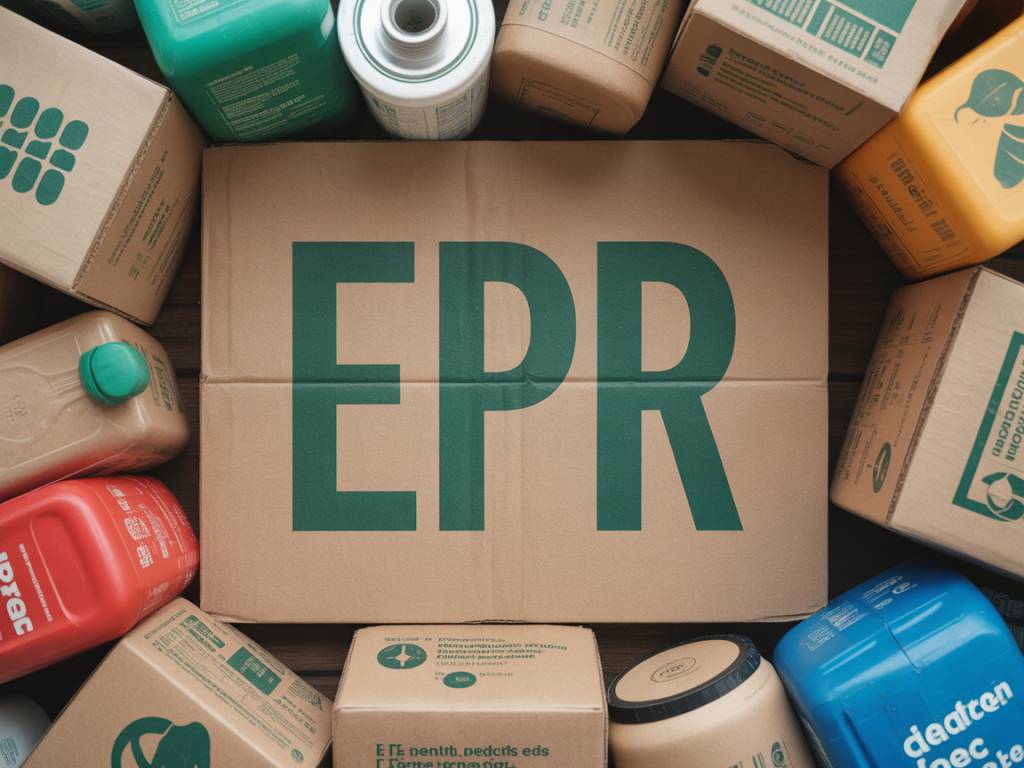
How Extended Producer Responsibility (EPR) Regulations Are Reshaping Packaging and Logistics Strategies for Global Brands
Extended Producer Responsibility (EPR) regulations are moving from policy discussions to operational reality for global brands. What started as a set of environmental directives is now directly reshaping packaging design, supply chain planning, and logistics optimization across markets. For manufacturers, retailers, and e‑commerce players, EPR is no longer just a compliance checklist: it is a strategic driver impacting cost structures, product development, and network design.
Understanding Extended Producer Responsibility in Packaging
Extended Producer Responsibility is a policy approach that makes producers financially and sometimes operationally responsible for the post-consumer phase of their products and packaging. Instead of municipalities or taxpayers bearing the full cost of waste collection, sorting, and recycling, EPR frameworks shift these obligations upstream to brand owners, importers, and manufacturers.
In packaging, EPR typically requires producers to:
- Register with national or regional EPR schemes or Producer Responsibility Organizations (PROs)
- Report the quantities and types of packaging placed on the market
- Pay eco-modulated fees based on recyclability, material type, and environmental impact
- Meet specific recycling, reuse, or recovery targets
- Provide data on packaging composition, labeling, and end-of-life management
These obligations are driving a fundamental shift in how packaging is specified, sourced, used, and recovered, forcing global brands to rethink long-established packaging and logistics strategies.
Why EPR Has Become a Global Priority for Brands
Several converging trends explain why Extended Producer Responsibility is now at the center of packaging and supply chain discussions:
- Rapid expansion of EPR laws: The EU Packaging and Packaging Waste Regulation (PPWR), country-specific EPR schemes in France, Germany, Italy and others, and emerging frameworks in the UK, Canada, India, and several US states are creating a complex regulatory environment.
- Rising compliance costs: Eco-fees are increasing and becoming more granular. Non-recyclable or hard-to-recycle materials are penalized with higher fees, pushing brands to redesign packaging.
- Retailer and marketplace pressure: Large retailers and online marketplaces increasingly require proof of EPR compliance as a condition of listing, especially for cross-border e‑commerce.
- Investor and consumer expectations: Sustainability targets, ESG reporting, and public commitments to reduce packaging waste are reinforcing the need for EPR-aligned packaging strategies.
For global brands, ignoring EPR is no longer an option. The financial, operational, and reputational implications are too significant.
How EPR Is Transforming Packaging Design Choices
Packaging optimization, once primarily driven by marketing, protection, and cost per unit, is now strongly influenced by EPR-related eco-modulation criteria. Design for recycling and design for circularity are becoming core pillars of packaging development.
Key shifts in packaging design include:
- Material simplification: Multi-material packaging and complex laminates are increasingly avoided because they are penalized by EPR fees and difficult to recycle at scale. Brands are moving towards mono-material solutions, such as all-PE or all-PP flexible packaging, or single-polymer rigid formats.
- Switching to more recyclable materials: Where infrastructure exists, cardboard, corrugated board, PET, and HDPE often benefit from lower eco-fees. This push incentivizes a shift away from PS, PVC, and certain mixed plastics.
- Reducing packaging weight and volume: Lightweighting reduces both material usage and EPR contributions, as many schemes base fees on tonnage placed on the market. However, brands must balance this with product protection and damage reduction requirements.
- Standardizing formats: To simplify reporting and compliance, companies increasingly rationalize SKUs and packaging formats, reducing the number of different materials and constructions in their portfolios.
- Reusable and refillable packaging systems: In markets where EPR frameworks recognize or reward reuse, global brands are testing refill-at-home, refill-in-store, and returnable packaging systems to reduce single-use packaging obligations.
Design decisions now require closer collaboration between packaging engineers, sustainability teams, compliance specialists, and logistics managers to ensure that what is optimized for recyclability is also viable in the supply chain.
EPR-Driven Impacts on Logistics and Supply Chain Operations
Extended Producer Responsibility does not only affect packaging formats; it also has implications for logistics, warehousing, and reverse flows. For supply chain leaders, EPR is creating new constraints and opportunities.
Some of the most visible impacts include:
- Network design for take-back and reverse logistics: As brands pilot or scale reusable packaging and take-back schemes, they must design new flows for used packaging, including collection points, consolidation hubs, cleaning facilities, and refurbishment operations.
- Transport efficiency vs. recyclability trade-offs: Packaging that is optimal for recycling is not always optimal for palletization or cube utilization. Logistics teams are working with packaging engineers to find configurations that minimize empty space while maintaining high recyclability scores.
- Inventory management for multiple packaging variants: Different markets may require different packaging to comply with local EPR and labeling rules. This increases complexity in forecasting, production planning, and warehouse management.
- Data capture and traceability: EPR reporting obligations require precise volume and material tracking by country. Logistics and ERP systems must be able to allocate packaging flows to the right markets and support granular traceability.
- Collaboration with waste management and recyclers: Some brands are partnering directly with recyclers and waste management companies to secure capacity, close material loops, and validate the real recyclability of their packaging at scale.
In this context, logistics strategies must integrate new criteria: not only cost per pallet or lead time, but also EPR exposure, reuse rates, and end-of-life performance by market.
Data, Reporting, and Compliance: From Burden to Strategic Asset
One of the most challenging aspects of EPR for global brands is the need for high-quality, country-specific data on packaging materials, volumes, and flows. Fragmented regulations and varying reporting formats increase the administrative burden for multinational organizations.
However, leading companies are turning this necessity into a source of competitive advantage by:
- Centralizing EPR data management: Implementing dedicated EPR compliance platforms or integrating EPR modules into existing PLM, ERP, or sustainability reporting systems.
- Standardizing internal material classifications: Harmonizing material codes and packaging specifications across business units to ensure consistent reporting and easier eco-modulation analysis.
- Connecting packaging specs to operational data: Linking bill of materials data with sales and logistics flows to automate calculation of packaging placed on each market.
- Using EPR analytics to guide design decisions: Modeling eco-fee impacts of different packaging options early in the development process, enabling cost-informed sustainability choices.
For many brands, investment in EPR data and digital tools is now seen not only as compliance insurance but also as a way to uncover savings, identify low-performing SKUs, and optimize packaging portfolios.
Country-Specific EPR Variations and Their Strategic Implications
One of the greatest complexities for global brands lies in the heterogeneity of EPR schemes. While the EU aims for greater harmonization, the reality on the ground remains fragmented, and beyond Europe, differences are even more pronounced.
Variables that affect strategy include:
- Scope of covered materials: Some schemes include all consumer packaging, others extend to B2B packaging, e‑commerce packaging, or transport packaging.
- Fee structures and eco-modulation criteria: Recyclability, recycled content, presence of additives, labeling practices, and even color (e.g. black plastics) can influence fees differently by country.
- Targets and penalties: Recycling and recovery targets, deposit return systems (DRS), and potential penalties for non-compliance vary significantly between jurisdictions.
- Administrative requirements: Registration processes, reporting frequency, data granularity, and audit requirements differ, affecting internal resources and external consultancy needs.
This patchwork forces brands to choose between two approaches: hyper-local packaging strategies tailored to each market, or more standardized global solutions designed to meet the strictest common denominator. Many are transitioning towards a hybrid model, standardizing where possible while allowing flexibility for markets with unique regulatory demands.
Strategic Responses from Global Brands
Facing rising EPR costs and complexity, global brands are not only reacting; they are proactively reshaping their packaging and logistics strategies. Some recurring strategic responses include:
- Embedding EPR into packaging development gates: Including EPR impact reviews during design phases, requiring confirmation that new packaging formats meet recyclability and reporting requirements in target markets.
- Revisiting supplier relationships: Selecting packaging suppliers able to provide detailed material data, recyclability certifications, and design support for EPR optimization.
- Scaling reusable and returnable packaging pilots: For specific product lines or B2B flows, using reusable transit packaging, refillable containers, or pool systems to reduce one-way packaging volumes.
- Consolidating low-volume SKUs or formats: Eliminating complex, niche, or low-rotation packaging variants that are costly to manage and report under EPR schemes.
- Engaging in industry coalitions: Participating in sectoral initiatives and EPR working groups to influence policy design, share best practices, and anticipate regulatory changes.
In many organizations, responsibility for EPR has moved beyond legal and CSR departments to become a joint priority for packaging, procurement, supply chain, and finance teams.
Opportunities for Packaging and Logistics Suppliers
For packaging manufacturers, logistics providers, and technology vendors, the rise of Extended Producer Responsibility is opening new market opportunities. Buyers are actively searching for partners that can help reduce EPR costs and improve compliance.
High-demand solutions and services include:
- EPR-optimized packaging materials: Mono-material structures, high-recycled-content packaging, recyclable barrier alternatives, and clear on-pack recyclability labeling.
- Reusable packaging systems: Standardized reusable crates, pallets, containers, and returnable e‑commerce packaging, combined with tracking and pooling services.
- Reverse logistics capabilities: Network design for collection, backhauling solutions, and specialized handling of used packaging.
- Digital EPR and packaging data tools: Platforms that centralize packaging specifications, automate reporting, and simulate fee impacts of different design and market scenarios.
- Consulting and compliance support: Expertise in navigating country-specific EPR rules, registering producers, and optimizing portfolios to align with eco-modulation criteria.
Suppliers that position themselves as EPR solution partners rather than simple commodity providers are better placed to build long-term strategic relationships with global brands.
Preparing for the Next Wave of EPR Regulation
Regulatory momentum suggests that EPR obligations will continue to expand in scope and ambition, with closer scrutiny on performance and transparency. Possible evolutions include stricter recyclability requirements, higher targets, minimum recycled content mandates, and greater alignment with broader circular economy policies.
For brands, this means that investing early in EPR-ready packaging and logistics strategies can avoid last-minute redesigns, disruptions, and unanticipated costs. Building flexible packaging portfolios, robust data systems, and resilient reverse logistics networks will be key to navigating this evolving landscape.
Extended Producer Responsibility is accelerating the integration of sustainability, compliance, and operational efficiency in packaging and supply chain management. For global brands, the challenge is significant, but so is the opportunity to reconfigure packaging and logistics models for a more circular, data-driven, and resilient future.
 Harnessing Generative AI to Design Sustainable Packaging and Anticipate Logistics Disruptions
  Enhancing Packaging Sustainability Through Circular Economy Practices
  Smart Packaging Technologies: Bridging the Gap Between Product Safety and Supply Chain Efficiency
  Sustainable packaging innovations transforming logistics operations
  How Generative AI Is Redefining Packaging Design and Logistics Planning for Omnichannel Retail
  How AI-Driven Demand Forecasting Is Reducing Packaging Waste and Logistics Costs for E‑Commerce Retailers
  Harnessing Predictive Analytics to Align Packaging Design with Logistics Efficiency