


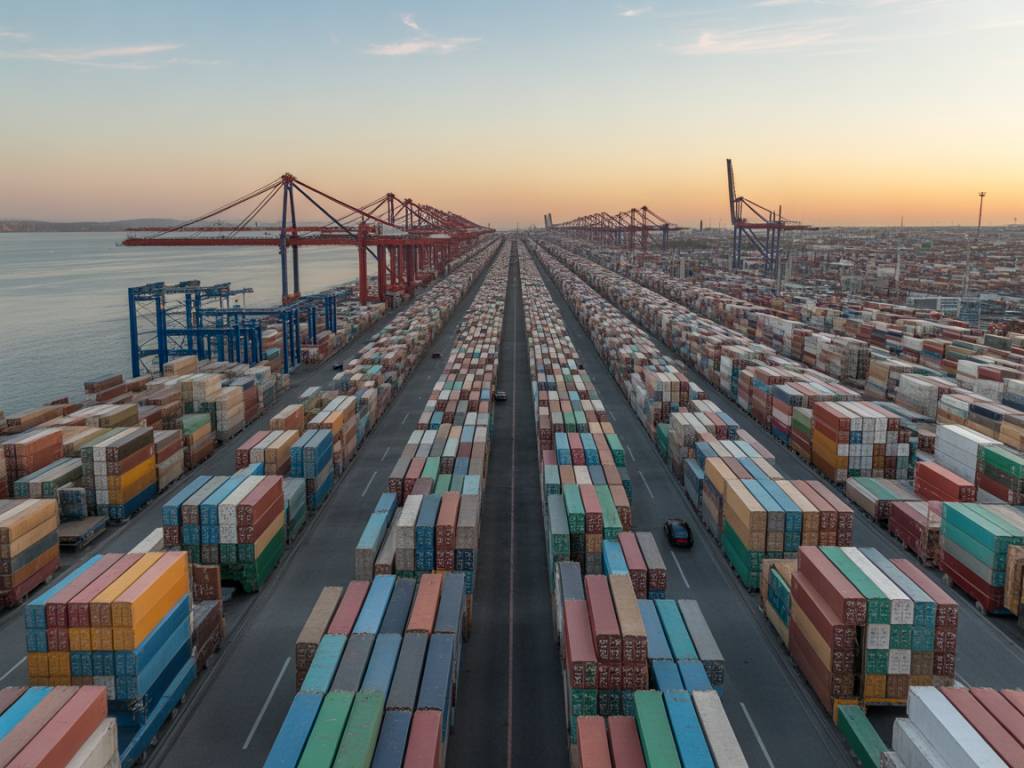
Packaging Standardization: A Growing Priority in Global Logistics
In an era defined by supply chain disruptions, volatile freight rates, trade fragmentation, and increasing pressure to improve operational efficiency, packaging standardization is moving from a back-office consideration to a strategic logistics lever. For global shippers, manufacturers, distributors, and e-commerce operators, the way goods are packed, labeled, palletized, and protected can directly affect transport efficiency, warehouse productivity, damage rates, inventory control, and compliance across borders.
Packaging standardization refers to the use of consistent packaging specifications, dimensions, materials, labeling practices, and handling formats across products, facilities, and markets. While it may seem like a technical detail, it has a broad impact on supply chain resilience. Standardized packaging helps companies reduce variability, simplify operations, and respond more effectively when transport capacity, labor availability, or customs conditions change unexpectedly.
In global trade, where products often move through multiple nodes and modes of transport, packaging is not only a protective layer. It is also a coordination tool. When packaging is standardized, logistics teams can plan more accurately, optimize container loading, reduce dimensional inefficiencies, and improve traceability from origin to destination. These advantages are becoming increasingly important as companies seek supply chain resilience strategies that can withstand disruption without sacrificing service levels.
Why Packaging Standardization Matters in Global Trade
The globalization of supply chains has increased the number of handoffs, regulatory requirements, and physical touchpoints a product encounters. Each touchpoint introduces risk, from mislabeling and repacking to transit damage and warehouse bottlenecks. Standardized packaging reduces these risks by creating consistency across operations.
For companies shipping across multiple countries, packaging standardization supports compliance with customs documentation, import requirements, labeling rules, and local distribution systems. It also helps maintain product integrity across varied climates and handling conditions. A standardized approach can be especially valuable for industries such as pharmaceuticals, food and beverage, consumer electronics, automotive parts, and industrial components, where product protection and traceability are critical.
From a commercial perspective, standardized packaging also strengthens cost control. When package sizes, carton specifications, and pallet configurations are consistent, companies can better calculate freight volumes, reduce air transport waste, and improve cubic utilization in containers and trailers. This is a key consideration in parcel shipping, LTL freight, ocean freight consolidation, and international air cargo.
How Standardization Improves Logistics Resilience
Resilience in logistics means more than recovery after disruption. It means having systems that can absorb shock, maintain performance, and adapt quickly. Packaging standardization contributes to resilience in several practical ways.
First, it improves predictability. Standard carton sizes, pallet patterns, and load configurations make it easier for warehouse management systems, transport planners, and third-party logistics providers to forecast requirements and allocate resources. Predictability becomes especially valuable during peak seasons, labor shortages, port delays, or urgent rerouting scenarios.
Second, it reduces dependence on manual intervention. When packaging specifications are standardized, fewer exceptions need to be managed on the warehouse floor. This lowers the chance of human error and enables faster throughput in picking, packing, cross-docking, and loading operations. In high-volume environments, even small reductions in handling complexity can produce significant gains in service reliability.
Third, it supports redundancy and flexibility. If a supplier, carrier, or distribution center must be switched unexpectedly, standardized packaging allows another node in the network to step in with minimal adaptation. This interoperability is a major asset in global trade, where companies often need to diversify sourcing or reroute shipments quickly in response to geopolitical events, weather disruption, or congestion.
Operational Benefits Across the Supply Chain
Packaging standardization generates measurable benefits across several supply chain functions.
These gains often extend beyond logistics. Standard packaging can simplify product launches, facilitate international expansion, and reduce the engineering effort needed to adapt packaging for each market. For brands operating in omnichannel environments, standardization also helps align retail, wholesale, and direct-to-consumer fulfillment processes.
Packaging Standardization and Sustainability Goals
Sustainability is another major driver behind packaging standardization. As companies work to reduce waste, lower carbon emissions, and improve packaging recyclability, standardized formats can make those efforts easier to implement and measure.
When packaging dimensions are optimized and repeated consistently, companies can reduce excess material use and limit the need for void fill. Standard cartons and pallets can also improve space utilization in transport, which means fewer shipments, lower fuel consumption, and lower emissions per unit shipped. In logistics sustainability reporting, these efficiency improvements can contribute directly to environmental performance metrics.
Standardization also supports circular economy initiatives. Reusable packaging systems, returnable transport packaging, and closed-loop logistics models depend on uniform formats that can circulate efficiently through multiple trips. In industries adopting reusable plastic crates, collapsible containers, or standardized totes, packaging consistency is essential to achieving scalability.
In addition, standardized specifications make it easier to select recyclable materials and verify compliance with packaging regulations. This is increasingly relevant as governments and trading partners tighten rules around packaging waste, extended producer responsibility, and material disclosure.
The Role of Digitalization and Data in Standardized Packaging
Packaging standardization is increasingly linked to logistics digitalization. Modern supply chains depend on data, and standardized packaging provides a stable basis for that data to be used effectively. When package dimensions, weights, and labeling formats are consistent, it becomes easier to integrate packaging information into transportation management systems, warehouse management systems, and enterprise resource planning platforms.
Digital twins, automated dimensioning systems, and AI-driven load optimization tools all perform better when packaging input data is reliable and standardized. Likewise, serial shipping containers, GS1 labels, barcode standards, and RFID tagging can be deployed more effectively when there is alignment in packaging design across markets and facilities.
For companies pursuing supply chain visibility, standardization also improves traceability. Consistent labeling and package identification help logistics teams track shipments in real time, identify exceptions earlier, and respond more quickly to claims, delays, or quality issues. In global trade, where visibility gaps can create costly uncertainty, this is a significant operational advantage.
Challenges in Implementing Packaging Standardization
Despite its benefits, packaging standardization is not always simple to implement. Many organizations have inherited packaging designs developed for different product lines, regional requirements, or legacy production systems. In some cases, packaging has been customized to meet retailer specifications, local legislation, or product sensitivity needs.
One common challenge is balancing standardization with product protection. Fragile, temperature-sensitive, or high-value items may require special packaging formats that cannot be fully standardized without additional engineering. Similarly, companies operating in diverse markets may need to adapt packaging for language, labeling, or compliance reasons.
There is also an internal change management dimension. Packaging standardization often requires coordination between procurement, engineering, manufacturing, logistics, marketing, and quality teams. Without executive support and a cross-functional strategy, organizations may struggle to rationalize packaging portfolios or harmonize specifications across business units.
Another obstacle is supplier alignment. Packaging suppliers, converters, and contract manufacturers must be able to support standardized formats at scale and with consistent quality. This may require supplier development, revised specifications, and longer-term sourcing agreements.
Where Businesses Are Seeing the Greatest Impact
Companies are seeing particularly strong results in sectors where high shipment volumes, international complexity, and damage sensitivity converge. In e-commerce, packaging standardization supports faster fulfillment and lower shipping costs. In automotive and industrial supply chains, it enables efficient part replenishment and better container optimization. In consumer packaged goods, it improves palletization and retail distribution. In life sciences, it helps maintain compliance and product integrity during cross-border movement.
Third-party logistics providers are also leveraging packaging standardization to improve service quality. For 3PLs and contract logistics operators, standardized packaging simplifies onboarding, reduces storage complexity, and increases the scalability of warehouse automation. For shippers, working with logistics partners that understand packaging optimization can generate substantial operational savings.
Standardized packaging is also becoming important in omnichannel fulfillment, where products must move efficiently through retail, wholesale, and parcel networks. The same item may need to be stored in a distribution center, delivered to a store, and shipped directly to an end customer. A consistent packaging strategy helps reduce the need for multiple packaging SKUs and supports more agile fulfillment decisions.
Packaging Standardization as a Competitive Advantage
In global trade, resilience is increasingly tied to operational simplicity. Packaging standardization supports that simplicity by removing friction from transport, warehousing, compliance, and procurement processes. It is not merely a packaging design choice; it is a supply chain strategy that influences cost, speed, reliability, and sustainability.
As companies face continued uncertainty in international logistics, those that treat packaging as a strategic asset are likely to be better positioned than those that see it as a purely functional necessity. Standardized packaging can improve supply chain resilience, strengthen logistics performance, and support long-term competitiveness in complex global markets.
For businesses evaluating packaging improvements, the most effective approach is often to begin with high-volume products, frequent shipping lanes, or operational pain points such as damage claims, poor pallet utilization, or excess packaging variation. From there, organizations can build a packaging standardization roadmap that aligns engineering, logistics, and sustainability objectives while supporting future growth in global trade.