

How Geopolitical Risk and Trade Volatility Are Reshaping Packaging Strategy in Global Logistics
Geopolitical risk and trade volatility are no longer occasional disruptions in global logistics; they are now structural forces shaping how companies design, source, and deploy packaging. From shifting tariffs and sanctions to port congestion, rerouted shipping lanes, and sudden regulatory changes, the operational environment for international commerce has become more unpredictable. In response, packaging strategy has moved beyond cost and presentation. It is now a core element of supply chain resilience, freight efficiency, product protection, and regulatory compliance.
For logistics teams, manufacturers, and procurement leaders, packaging decisions increasingly affect transit performance, landed cost, and service continuity. A container optimized for one trade corridor may be poorly suited for a longer multimodal route. A packaging specification designed for stable customs environments may fail when documentation, labeling, or materials rules change overnight. In this environment, global logistics packaging must be flexible, durable, compliant, and easy to adapt.
Why geopolitical risk has become a packaging issue
Geopolitical risk influences packaging in ways that are both direct and indirect. Directly, trade restrictions can limit access to raw materials such as paper pulp, plastics, adhesives, and specialty coatings. Indirectly, sanctions, regional conflicts, and diplomatic tensions can force companies to change transportation routes, switch carriers, or redesign distribution networks. Each of these changes affects the packaging requirements of the supply chain.
When lead times lengthen and route reliability declines, packaging must do more than protect the product. It must also preserve goods across longer dwell times, extra handling events, and variable climates. In practical terms, this often means stronger corrugated packaging, better cushioning materials, improved moisture resistance, and packaging formats that simplify cross-border inspection and repacking.
Geopolitical instability also creates pressure on inventory strategy. Companies holding larger safety stocks may need packaging that supports extended storage. That can mean more durable primary packaging, stronger outer cartons, and pallet configurations that withstand prolonged warehouse conditions. As a result, packaging has become a tactical lever in risk mitigation, not merely an afterthought at the end of production.
Trade volatility and the rise of flexible packaging design
Trade volatility refers to rapid shifts in tariffs, customs enforcement, freight rates, and trade rules. For packaging strategy, volatility creates a need for flexibility at every stage of the supply chain. Businesses can no longer assume that one packaging specification will remain optimal across all markets or shipping lanes.
Flexible packaging design helps companies adapt quickly to changing conditions. Standardized box sizes, modular inserts, and packaging systems with interchangeable components make it easier to respond when transport modes change or export markets are expanded. This is especially relevant for multinational companies that need to align packaging performance across different regions while still respecting local compliance requirements.
Packaging engineers are also paying closer attention to dimensional weight, cube optimization, and pallet utilization. When freight prices increase or carriers impose stricter volumetric rules, even small inefficiencies in packaging can significantly raise logistics costs. A well-designed export packaging strategy can reduce air freight exposure, improve container fill rates, and lower the number of pallets required per shipment.
- Reduce excess void space in cartons to improve freight efficiency
- Standardize packaging footprints for better palletization and container loading
- Use modular protective packaging to adapt to multiple product formats
- Design packaging that performs across road, rail, sea, and air transport
- Maintain alternate pack specifications for high-risk trade lanes
Packaging resilience as a supply chain strategy
In global logistics, packaging resilience means the ability of packaging to perform reliably under changing transport conditions, regulatory constraints, and material supply disruptions. This concept has become essential as companies seek to protect goods across increasingly complex distribution networks.
Resilient packaging strategy starts with the product itself. Fragile, temperature-sensitive, high-value, or hazardous goods often require packaging systems that combine physical protection with traceability and compliance features. This can include reinforced cartons, insulated shipper boxes, desiccants, tamper-evident seals, shock indicators, and pallet wrap designed for long-distance movement.
Resilience also depends on sourcing. Businesses increasingly want dual sourcing or multi-sourcing for packaging materials to avoid dependency on a single region or supplier. If a trade conflict disrupts paperboard imports or raises the cost of polymers, procurement teams need qualified alternatives ready to deploy. This is one reason why many companies are reviewing their packaging supplier base as part of broader supply chain risk management.
Packaging resilience can also support business continuity in the event of customs delays or rerouted shipments. If freight is detained longer than expected, packaging must still protect its contents through additional storage and handling cycles. In this context, transit packaging, overpack solutions, and moisture-resistant materials are becoming more important across industries such as electronics, pharmaceuticals, automotive parts, and consumer goods.
Compliance, labeling, and cross-border packaging requirements
As trade flows shift, compliance requirements become more complex. Packaging must satisfy not only product protection goals but also customs, import, export, and environmental regulations. This is especially critical in markets where rules around labeling, country of origin, recycling, hazardous materials, and wood packaging materials differ widely.
Non-compliant packaging can delay shipments, increase inspection rates, and trigger additional costs. For example, export packaging that uses untreated wood can run into phytosanitary restrictions in certain markets. Labels may need to be adjusted for language, safety symbols, or regulatory notices. In some jurisdictions, packaging waste regulations are affecting material selection and producer responsibility obligations.
This regulatory variability encourages companies to design packaging systems that are easier to localize. Clear label zones, standardized documentation pockets, and adaptable artwork layouts can reduce the time needed to reconfigure packaging for different destinations. For firms operating in high-compliance industries, packaging specification management is becoming part of trade compliance operations.
- Review labeling formats for multilingual and regulatory alignment
- Verify packaging materials against destination-market restrictions
- Ensure wood packaging meets ISPM 15 requirements where applicable
- Plan for customs inspection by using accessible carton markings and documentation
- Track packaging changes through version-controlled specifications
The cost implications of volatility on packaging decisions
When geopolitical risk drives freight disruptions or commodity shortages, packaging costs often become more variable. Paperboard, plastics, tape, inks, and cushioning materials may all fluctuate in price depending on trade conditions and raw material availability. At the same time, logistics teams must balance unit cost against total landed cost.
Cheaper packaging is not always the most economical choice if it leads to damage, returns, or inefficient freight movement. A slightly stronger corrugated box, for example, may reduce product loss and lower claims in a volatile shipping environment. Likewise, better pallet stabilization can prevent cascading damage during transshipment or extended storage. In many cases, the total cost of ownership is improved when packaging is designed for disruption rather than only for ideal conditions.
Companies are also reassessing the tradeoff between packaging weight and protective performance. Lightweight packaging can reduce shipping costs, but only if it still provides adequate protection and stacking strength. In unstable trade corridors, a more robust packaging format may be justified by fewer breakdowns, faster clearance, and fewer replacements. The objective is to align packaging economics with operational reliability.
Sustainability under pressure: balancing ESG and resilience
Trade volatility and geopolitical risk have not reduced the importance of sustainable packaging. Instead, they have made the sustainability challenge more complex. Businesses are expected to reduce packaging waste, increase recyclability, and improve material efficiency while still managing disruptions and compliance pressures.
In practice, this means packaging teams are evaluating recycled corrugated packaging, mono-material formats, right-sized cartons, and reusable transit packaging where appropriate. However, sustainability goals must be balanced against the realities of long-distance logistics. A fully recyclable solution that fails in transit can create more waste than it saves. For this reason, packaging sustainability must be assessed alongside durability, route length, and handling intensity.
Many companies are investing in data-driven packaging optimization to support both environmental and operational goals. By measuring damage rates, void fill usage, pallet density, and material consumption, they can identify opportunities to reduce waste without compromising resilience. This analytical approach is increasingly valuable in an environment where both carbon performance and supply chain reliability are under scrutiny.
What businesses should prioritize now
To adapt packaging strategy to geopolitical risk and trade volatility, companies should take a more integrated approach across procurement, logistics, quality, and compliance. Packaging can no longer be managed as a static specification. It needs to function as a dynamic part of the global logistics system.
Key priorities include packaging standardization, alternative material qualification, regional compliance mapping, and freight-efficient design. Companies should also regularly test packaging performance under realistic transport scenarios, including humidity, vibration, compression, and extended dwell times. These tests help ensure that packaging remains effective if routes change or transit times increase.
Digital packaging management tools can also help organizations react faster. Centralized specification libraries, supplier data visibility, and scenario-based planning support quicker decisions when tariffs shift or supply lanes are disrupted. For high-volume exporters, this can make the difference between maintaining service levels and experiencing costly delays.
- Build packaging specifications for multiple shipping scenarios
- Qualify backup suppliers for critical packaging materials
- Test packaging performance under longer transit and storage conditions
- Optimize packaging for freight efficiency and damage reduction
- Align packaging governance with trade compliance and sustainability teams
Packaging strategy as a competitive advantage
In today’s global logistics environment, the companies that perform best are often those that treat packaging as a strategic capability. A resilient packaging strategy supports customer service, protects margins, reduces claims, and improves responsiveness to market change. It also gives organizations more control over landed cost and operational continuity when the external environment becomes unstable.
As geopolitical risk and trade volatility continue to reshape international commerce, packaging will remain a key point of adaptation. The most effective packaging strategies will be those that combine protection, flexibility, compliance, sustainability, and cost discipline. For logistics professionals, that means packaging is now part of the core infrastructure of global trade.
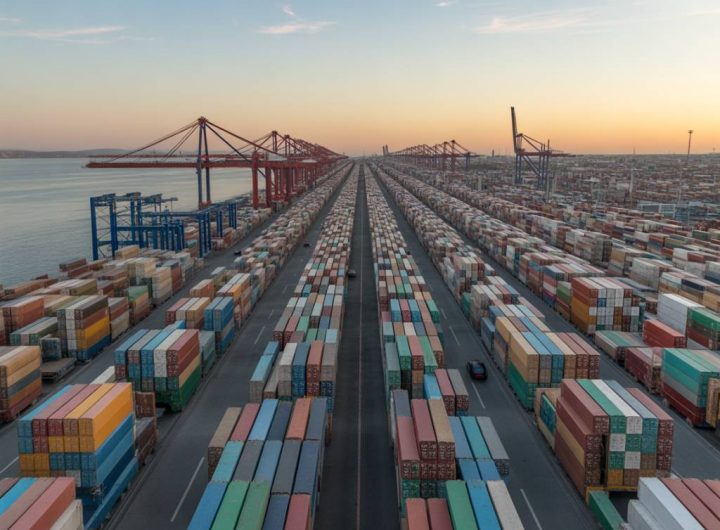 Why Packaging Standardization Is Becoming a Strategic Lever for Logistics Resilience in Global Trade
  Harnessing Generative AI to Design Sustainable Packaging and Anticipate Logistics Disruptions
 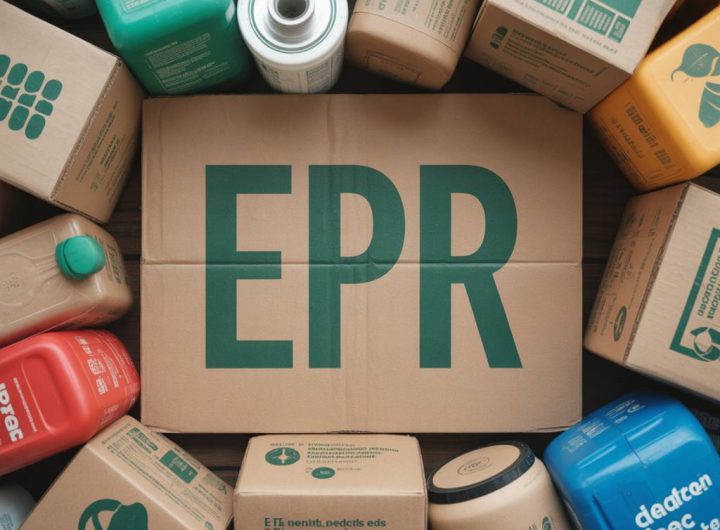 How Extended Producer Responsibility (EPR) Regulations Are Reshaping Packaging and Logistics Strategies for Global Brands
  Enhancing Packaging Sustainability Through Circular Economy Practices
  Smart Packaging Technologies: Bridging the Gap Between Product Safety and Supply Chain Efficiency
  Sustainable packaging innovations transforming logistics operations
  How skyreal is transforming xr solutions for industrial collaboration
  How Geopolitical Risk and Trade Volatility Are Reshaping Packaging Strategy in Global Logistics
  How Smart Regulations and Eco-Design Are Converging to Transform Packaging Logistics in Global Supply Chains